Sit-Up
A classic bodyweight core exercise that lifts your upper body from the floor into a seated position. It is one of the most familiar core exercises and needs no equipment to perform.
- Primary musclesCore
- Secondary musclesnone listed
- EquipmentBodyweight
- LevelBeginner · isolation
How to do the sit-up
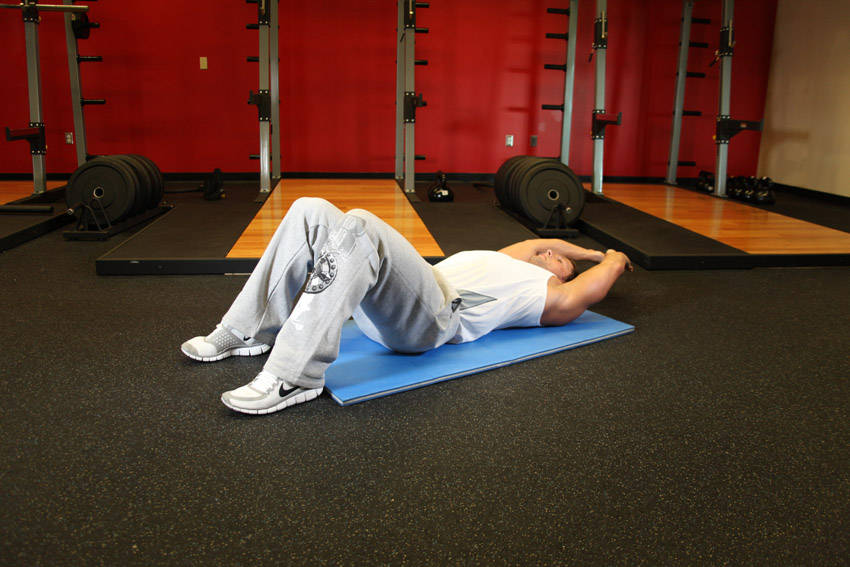
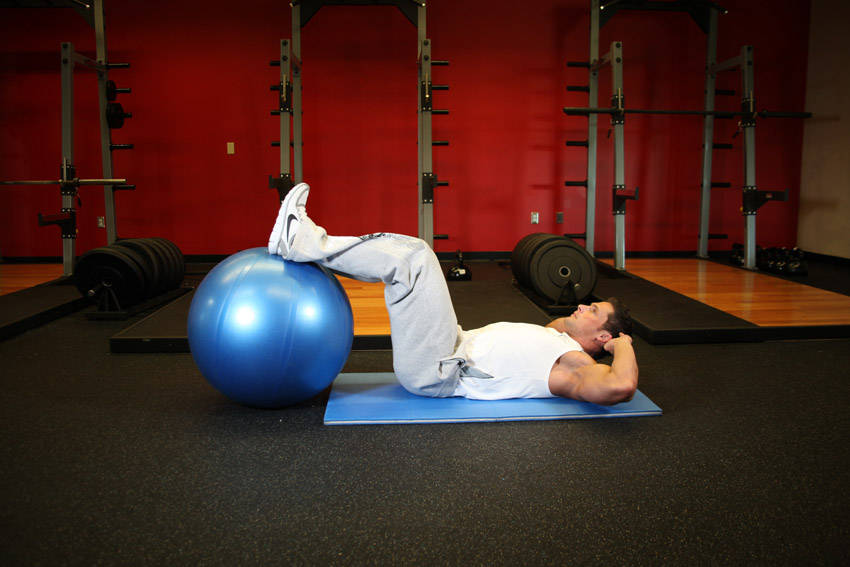
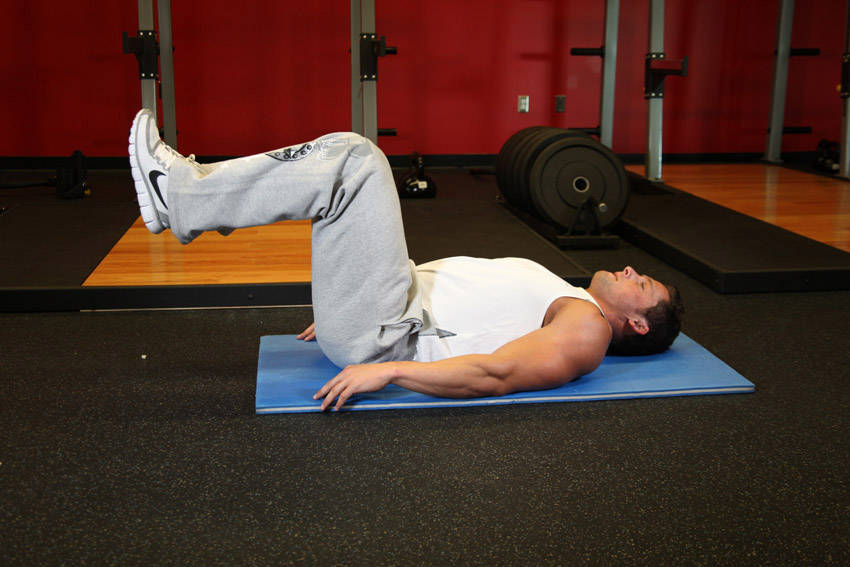
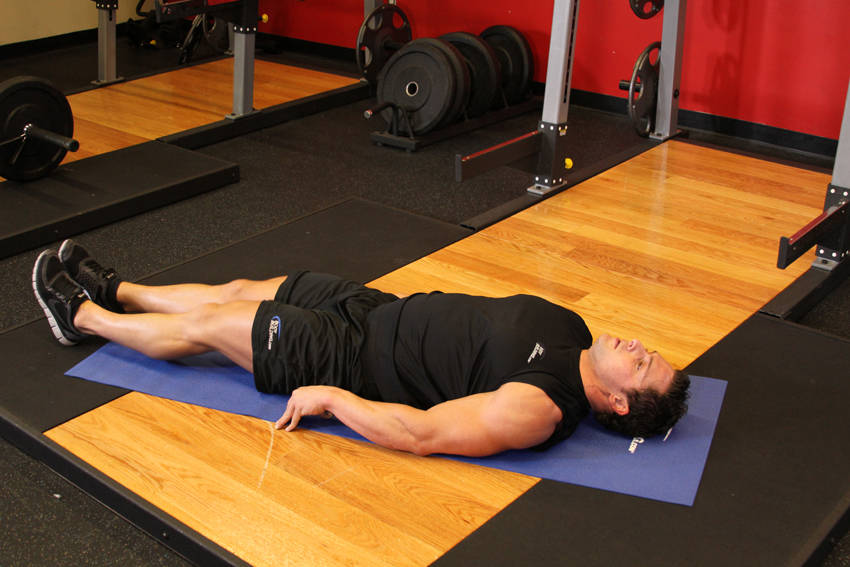
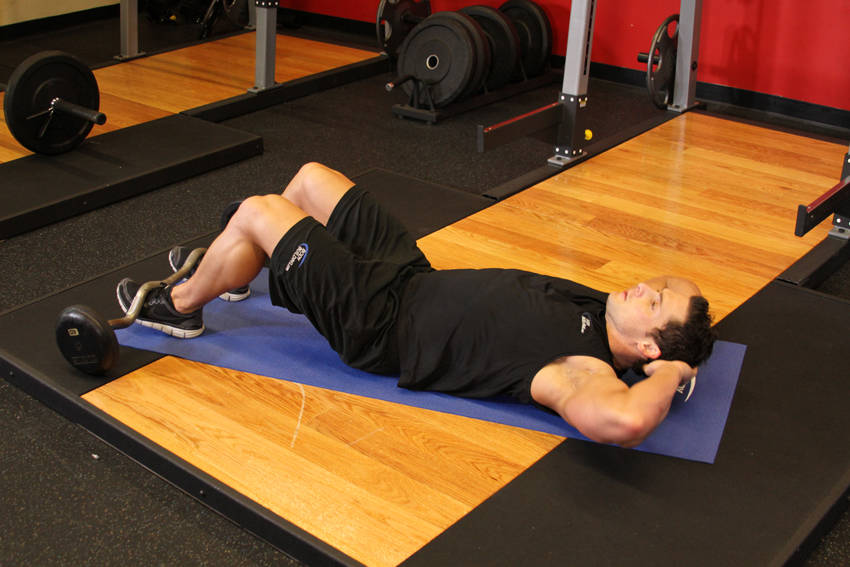
- Lie on your back with your knees bent and your feet anchored under something stable or held by a partner.
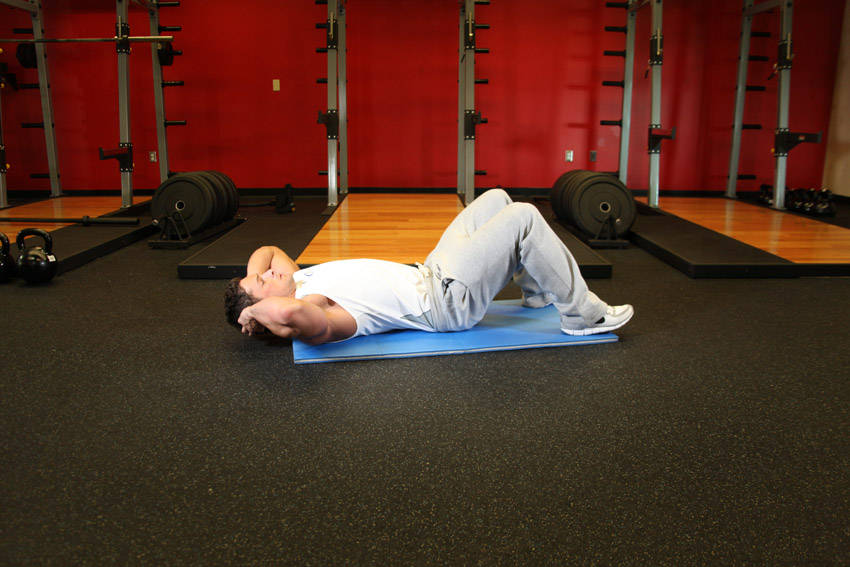
- Clasp your hands lightly behind your head without pulling on your neck.
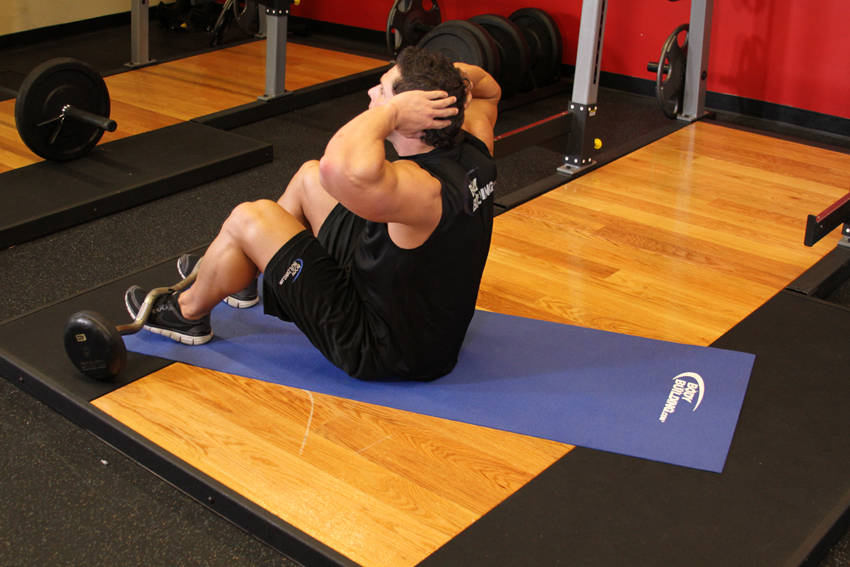
- Curl your upper body up off the floor, aiming to bring your chest toward your thighs.
- Continue until your torso is roughly upright, forming a V shape with your legs.
- Lower your upper body back down under control to the starting position.
- Repeat for the rest of your set, breathing out as you sit up.
Original library instructions (5 steps)
- Lie down on the floor placing your feet either under something that will not move or by having a partner hold them. Your legs should be bent at the knees.
- Place your hands behind your head and lock them together by clasping your fingers. This is the starting position.
- Elevate your upper body so that it creates an imaginary V-shape with your thighs. Breathe out when performing this part of the exercise.
- Once you feel the contraction for a second, lower your upper body back down to the starting position while inhaling.
- Repeat for the recommended amount of repetitions.
Common mistakes
- Yanking on the neck with your hands to help sit up; keep your hands light and let your abs do the work.
- Using your hip flexors to fling the torso up instead of curling through the spine.
- Rushing the lowering phase; control the descent instead of dropping back to the floor.
- Anchoring the feet under something that shifts; make sure your feet stay firmly in place.
Sets and reps by goal
| Goal | Sets, reps and rest |
|---|---|
| Strength | 3 sets of 12 to 15 reps, 45 to 60 seconds rest |
| Muscle | 3 sets of 15 to 20 reps, 30 to 45 seconds rest |
| Endurance | 2 to 3 sets of 20 to 25 reps, 30 seconds rest |
Ranges, not prescriptions. Start at the low end and add a set or a rep when every set feels controlled.
Tips
- Keep the movement slow and controlled rather than racing through as many reps as possible.
In the app: this exercise is one of 873 in GymPilot's library, with the same photos, form cues and a link back to the moment in an imported video it came from.
Questions
Are sit ups good for beginners?
Yes. They need no equipment and are one of the most familiar core exercises, making them an easy starting point for most people.
What muscles do sit ups work?
They mainly target the core, training the abs through a full curling motion from lying down to sitting upright.