Lying T-Bar Row
A machine based rowing exercise done lying face down on a pad, pulling a loaded bar toward your chest. It builds back thickness and suits lifters who want strict form without needing to stabilize their torso.
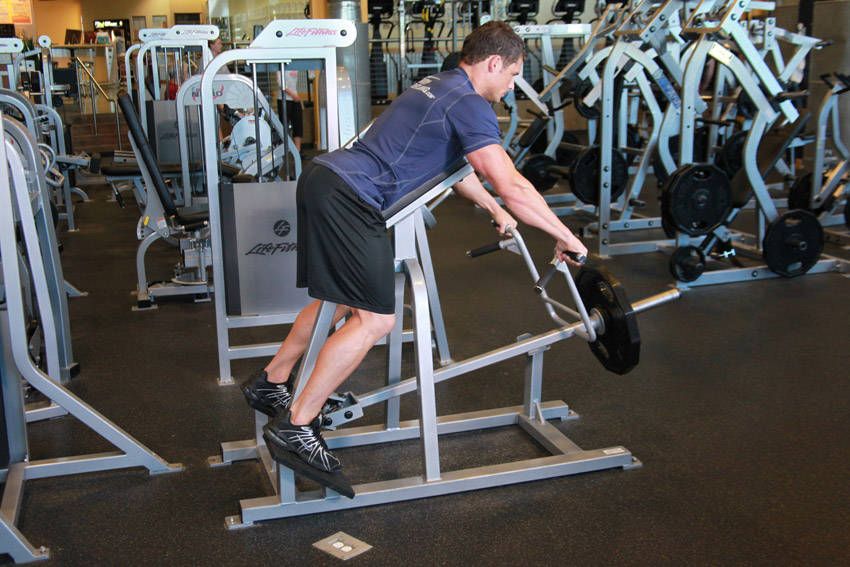
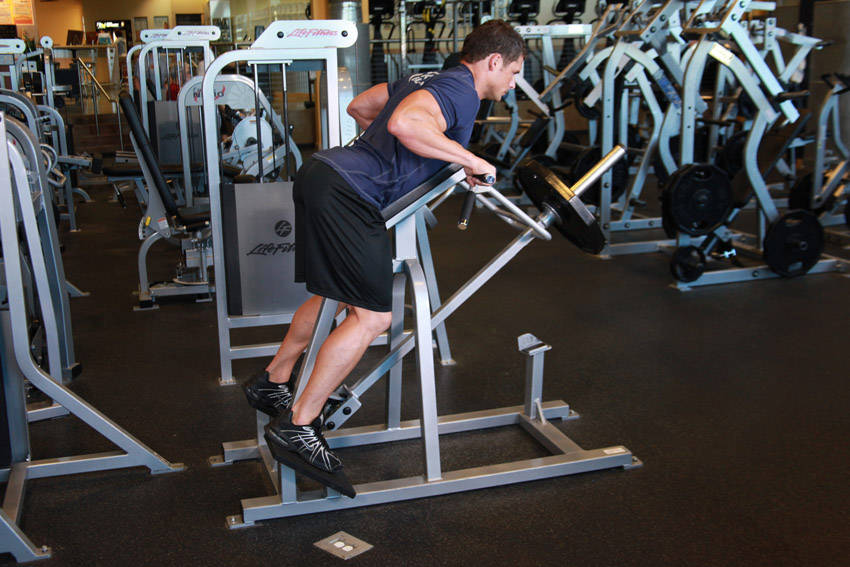
How to do the lying t-bar row
- Load the T bar row machine and set the pad height so your upper chest rests at the top of it.
- Lie face down on the pad and grip the handles with whichever grip suits the part of your back you want to emphasize.
- Lift the bar off its rest and extend your arms fully in front of you to start.
- Exhale as you pull the weight up, squeezing your back and keeping your upper arms close to your torso.
- Hold the contracted position for a second, then inhale as you lower the weight back down under control.
- Repeat for your full set without letting your body lift off the pad.
Original library instructions (6 steps)
- Load up the T-bar Row Machine with the desired weight and adjust the leg height so that your upper chest is at the top of the pad. Tip: In some machines all you can do is stand on the appropriate step that allows you to be at a height that has the upper chest at the top of the pad.
- Lay face down on the pad and grab the handles. You can either use a palms down, palms up, or palms in position depending on what part of your back you want to emphasize.
- Lift the bar off the rack and extend your arms in front of you. This will be your starting position.
- As you exhale slowly pull the weight up and squeeze your back at the top of the movement. Tip: Keep the upper arms as close to the torso as possible throughout the movement in order to better engage the back muscles. Also, do not lift your body off of the pad at any time and refrain from using the biceps to lift the weight.
- After a second contraction at the top of the movement, as you inhale, slowly go back down to the starting position.
- Repeat for the recommended amount of repetitions.
Common mistakes
- Lifting the chest off the pad to muscle up more weight; keep it pressed flat the whole set.
- Using the biceps to yank the weight up instead of pulling with the back; lead with the elbows.
- Letting the weight drop on the way down; lower it slowly to keep the back under tension.
- Flaring the elbows too wide, which shifts the work toward the shoulders; keep them closer to the body.
Sets and reps by goal
| Goal | Sets, reps and rest |
|---|---|
| Strength | 3 to 4 sets of 5 to 8 reps, 2 minutes rest |
| Muscle | 3 to 4 sets of 8 to 12 reps, 60 to 90 seconds rest |
| Endurance | 2 to 3 sets of 15 to 20 reps, 30 to 45 seconds rest |
Ranges, not prescriptions. Start at the low end and add a set or a rep when every set feels controlled.
Tips
- Squeeze your shoulder blades together at the top of every rep to get the most out of the movement.
- Try a palms up or palms in grip if you want to feel the row differently across your back.
In the app: this exercise is one of 873 in GymPilot's library, with the same photos, form cues and a link back to the moment in an imported video it came from.
Questions
Is the lying T bar row good for beginners?
Yes, since the pad supports your chest and removes the need to hold a hip hinge position, which makes it easier to focus on pulling technique than a standard bent over row.
What muscles does the lying T bar row work?
It mainly works the back, especially the middle back, with the biceps helping to bend the elbow and complete the pull.