Standing Calf Raises
A standing machine exercise that raises the heels against a padded lever to isolate the calves through a full range. It suits beginners wanting a supported way to train calf size and strength.
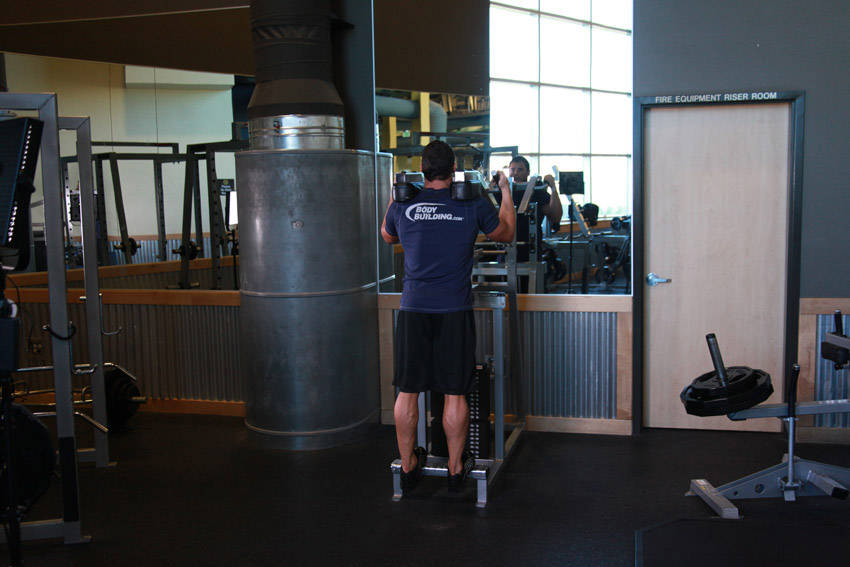
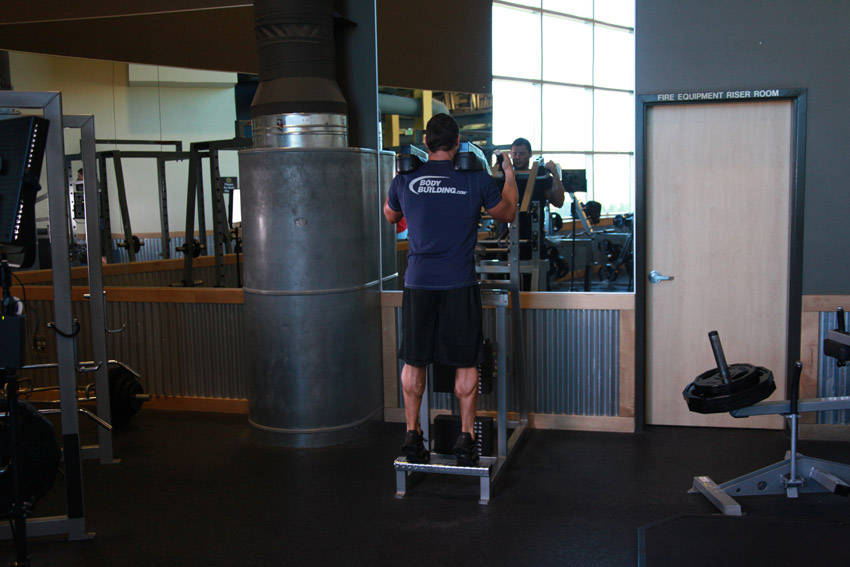
How to do the standing calf raises
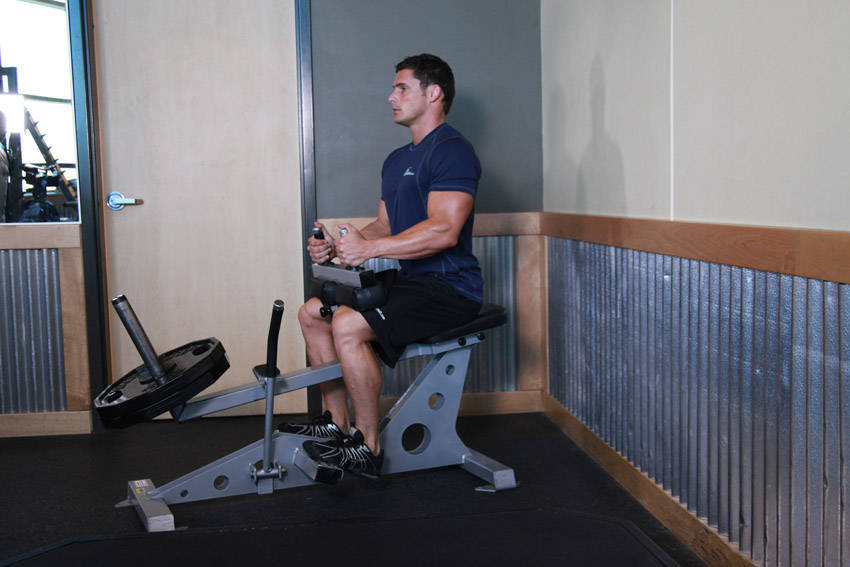
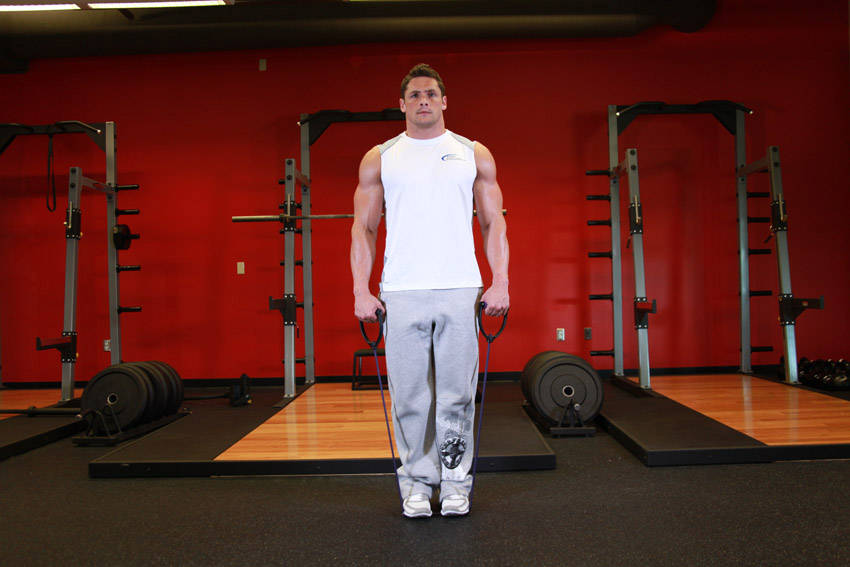
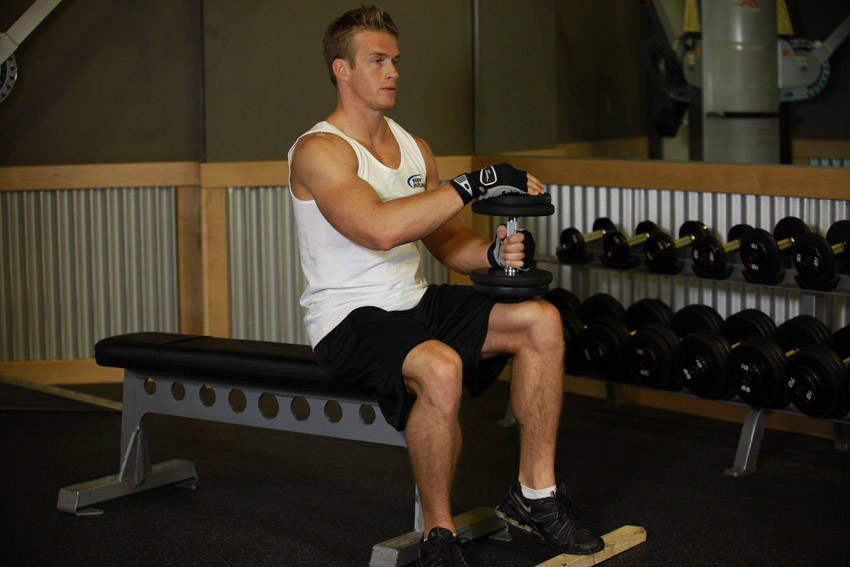
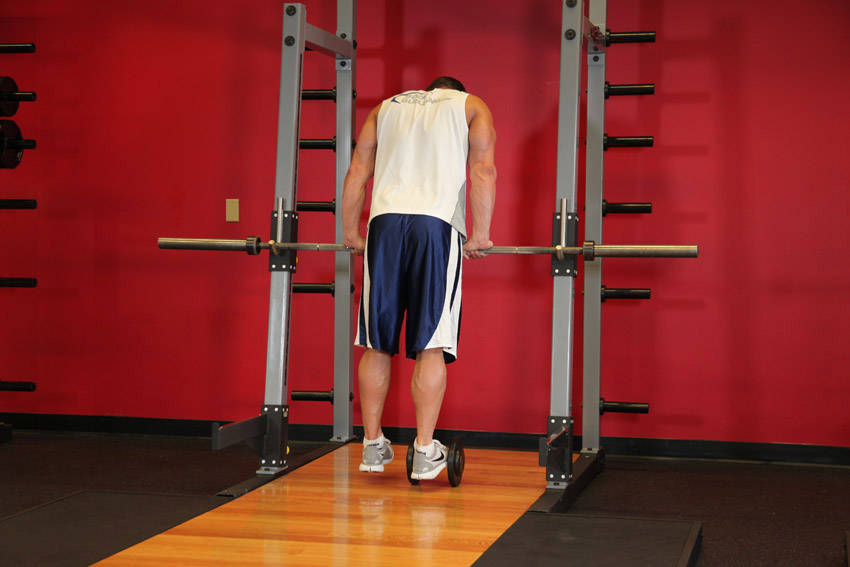
- Adjust the padded lever of the machine to fit your height.
- Position your shoulders under the pads and your toes facing forward on the calf block.
- Push the lever up by extending your hips and knees until you stand tall as your starting position.
- Raise your heels as high as possible by extending your ankles, keeping your knees still.
- Hold the contracted position for a second before lowering back down.
- Lower your heels slowly until you feel a stretch in your calves, then repeat.
Original library instructions (5 steps)
- Adjust the padded lever of the calf raise machine to fit your height.
- Place your shoulders under the pads provided and position your toes facing forward (or using any of the two other positions described at the beginning of the chapter). The balls of your feet should be secured on top of the calf block with the heels extending off it. Push the lever up by extending your hips and knees until your torso is standing erect. The knees should be kept with a slight bend; never locked. Toes should be facing forward, outwards or inwards as described at the beginning of the chapter. This will be your starting position.
- Raise your heels as you breathe out by extending your ankles as high as possible and flexing your calf. Ensure that the knee is kept stationary at all times. There should be no bending at any time. Hold the contracted position by a second before you start to go back down.
- Go back slowly to the starting position as you breathe in by lowering your heels as you bend the ankles until calves are stretched.
- Repeat for the recommended amount of repetitions.
Common mistakes
- Bending the knees during the raise; keep them with a slight, fixed bend throughout.
- Rushing the reps; slow the tempo so you get a full stretch and contraction each time.
- Locking the knees out completely; a very slight bend protects the joint during the raise.
- Using a range so short it barely moves the heel; press through the fullest comfortable range.
Sets and reps by goal
| Goal | Sets, reps and rest |
|---|---|
| Strength | 3 to 4 sets of 8 to 10 reps, 60 to 90 seconds rest |
| Muscle | 3 sets of 12 to 15 reps, 45 to 60 seconds rest |
| Endurance | 2 to 3 sets of 20 reps, 30 seconds rest |
Ranges, not prescriptions. Start at the low end and add a set or a rep when every set feels controlled.
Tips
- Pause at both the top and bottom of each rep to get the most out of the full range of motion.
In the app: this exercise is one of 873 in GymPilot's library, with the same photos, form cues and a link back to the moment in an imported video it came from.
Questions
Is standing calf raises good for beginners?
Yes. The machine supports your balance and guides the movement, making it a straightforward way to train the calves with a full range of motion.
What muscles does standing calf raises work?
It isolates the calves, training them through a full stretch and contraction as the ankles extend and flex.