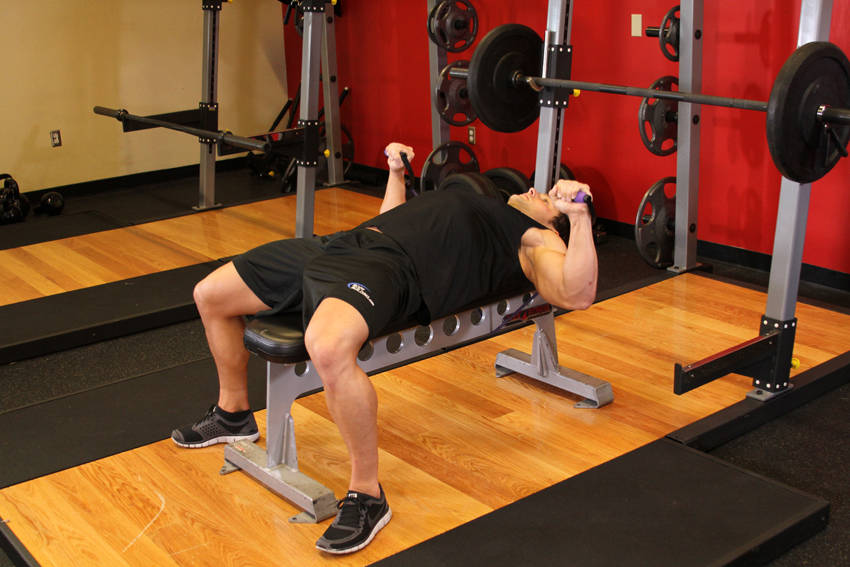
Incline Dumbbell Flyes - With A Twist
An incline dumbbell chest exercise that adds a wrist rotation to a standard flye, working the chest through a wide arc while the shoulders help control the dumbbells. Suits lifters already comfortable with a basic flye.
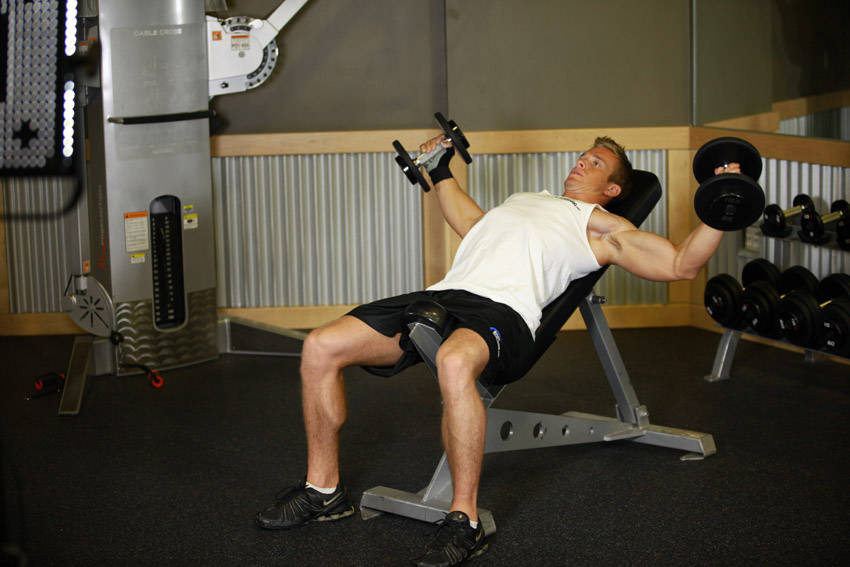
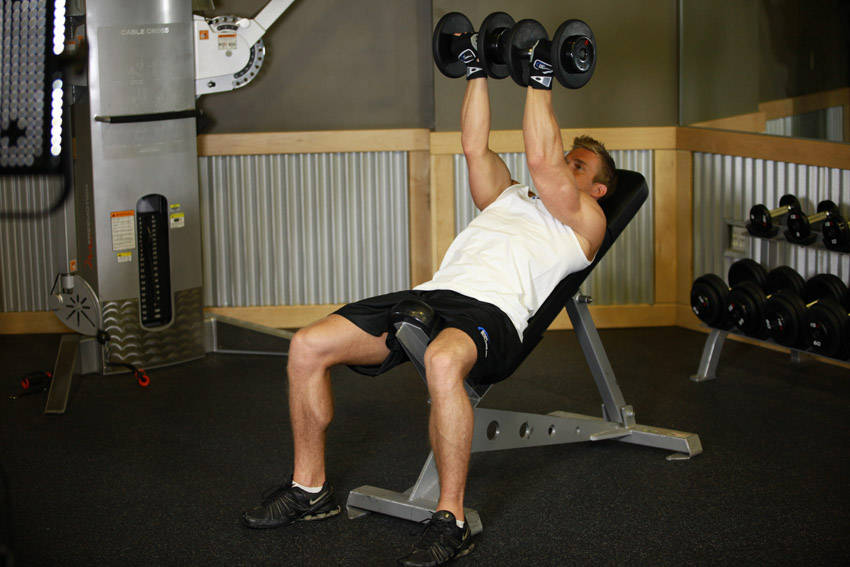
How to do the incline dumbbell flyes - with a twist
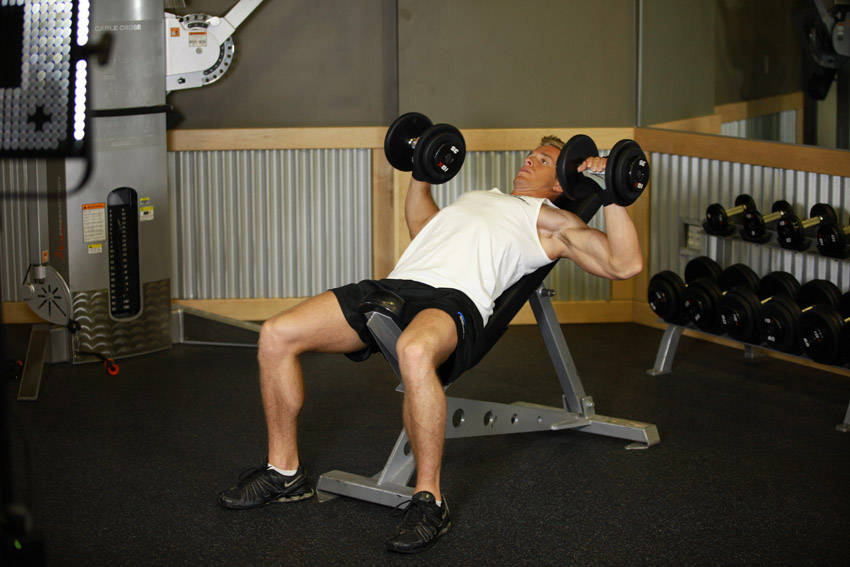
- Lie back on a bench set to a low incline, holding a dumbbell in each hand above your chest.
- Start with a slight bend in the elbows and your palms facing each other, pinkies close together.
- Lower the dumbbells out to the sides in an arc, rotating your wrists so your palms end facing up.
- Keep the elbow bend fixed throughout so the motion happens at the shoulders and wrists, not the elbows.
- Reverse the arc to bring the dumbbells back above your chest, rotating the wrists back as you go.
- Squeeze your chest briefly at the top, then repeat for the rest of your set.
Original library instructions (6 steps)
- Hold a dumbbell in each hand and lie on an incline bench that is set to an incline angle of no more than 30 degrees.
- Extend your arms above you with a slight bend at the elbows.
- Now rotate the wrists so that the palms of your hands are facing you. Tip: The pinky fingers should be next to each other. This will be your starting position.
- As you breathe in, start to slowly lower the arms to the side while keeping the arms extended and while rotating the wrists until the palms of the hand are facing each other. Tip: At the end of the movement the arms will be by your side with the palms facing the ceiling.
- As you exhale start to bring the dumbbells back up to the starting position by reversing the motion and rotating the hands so that the pinky fingers are next to each other again. Tip: Keep in mind that the movement will only happen at the shoulder joint and at the wrist. There is no motion that happens at the elbow joint.
- Repeat for the recommended amount of repetitions.
Common mistakes
- Bending the elbows more as the set gets harder, which turns the flye into a press; keep the bend constant.
- Using a steep incline, which shifts the work onto the front shoulders instead of the chest; keep the bench low.
- Lowering the dumbbells too far, which stresses the shoulder joint; stop level with your torso.
- Rushing the wrist twist, which cuts the chest squeeze short; pause briefly with pinkies together at the top.
Sets and reps by goal
| Goal | Sets, reps and rest |
|---|---|
| Strength | 3 to 4 sets of 6 to 8 reps, 90 seconds to 2 minutes rest |
| Muscle | 3 to 4 sets of 10 to 12 reps, 60 to 90 seconds rest |
| Endurance | 2 to 3 sets of 15 to 20 reps, 30 to 45 seconds rest |
Ranges, not prescriptions. Start at the low end and add a set or a rep when every set feels controlled.
Tips
- Pick lighter dumbbells than you would for a standard flye until the wrist rotation feels natural.
- Keep your lower back flat on the bench instead of arching to help the weights up.
In the app: this exercise is one of 873 in GymPilot's library, with the same photos, form cues and a link back to the moment in an imported video it came from.
Questions
Is the incline dumbbell flye with a twist good for beginners?
It works best once you can already do a standard dumbbell flye with control. The wrist rotation adds a small learning curve, so start with light dumbbells and a shallow incline.
What muscles does the incline dumbbell flye with a twist work?
It mainly targets the chest through a wide arc, with the shoulders helping to control the dumbbells as your wrists rotate through the movement.