Incline Dumbbell Press
A bench press done on an incline with a dumbbell in each hand, which shifts more emphasis onto the upper chest while still working the shoulders and triceps. It is a useful addition alongside a flat bench press.
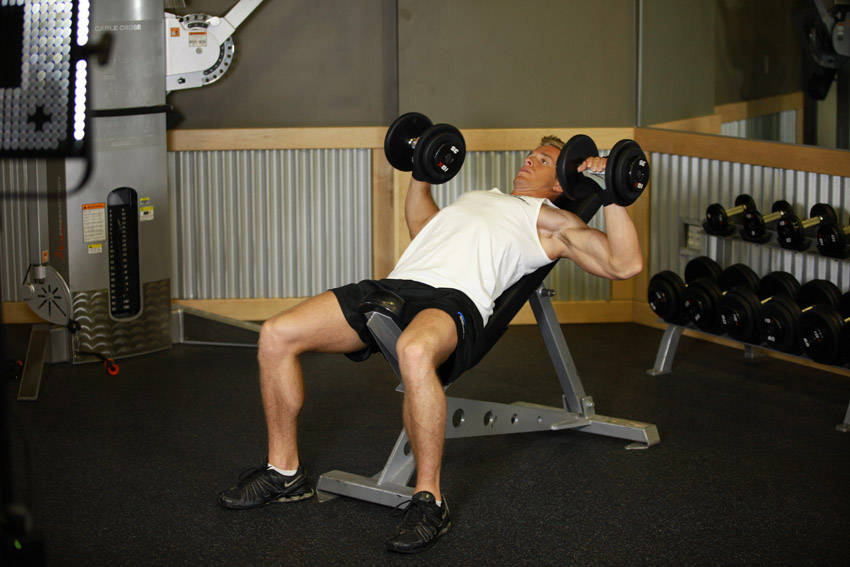
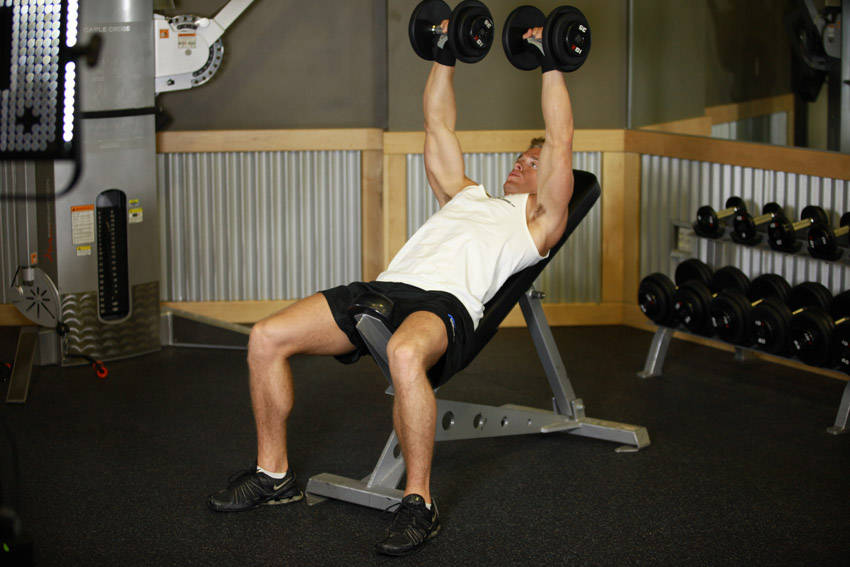
How to do the incline dumbbell press
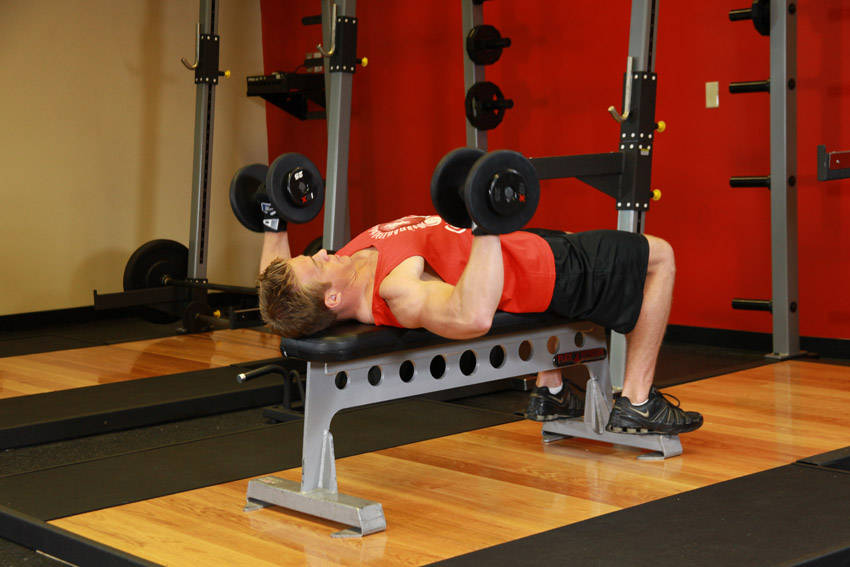
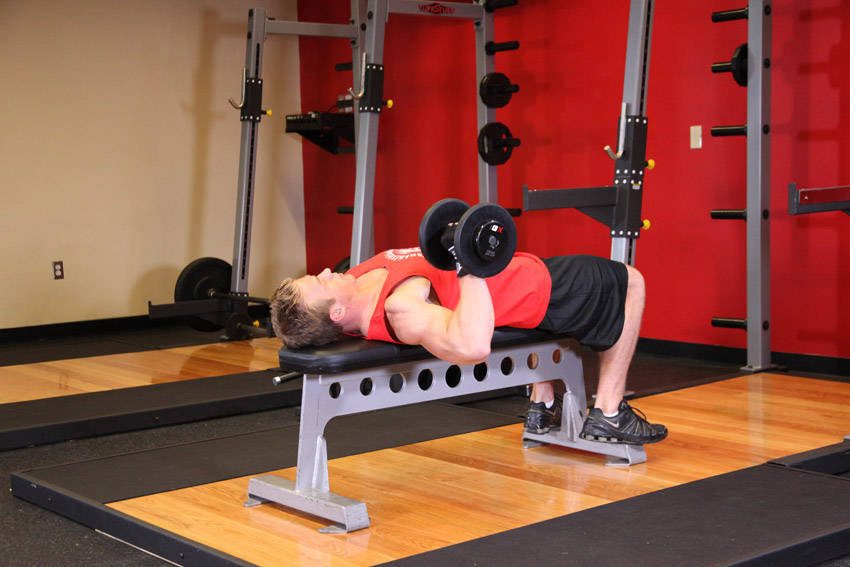
- Lie back on an incline bench holding a dumbbell in each hand resting on your thighs.
- Use your thighs to help push the dumbbells up one at a time to shoulder width.
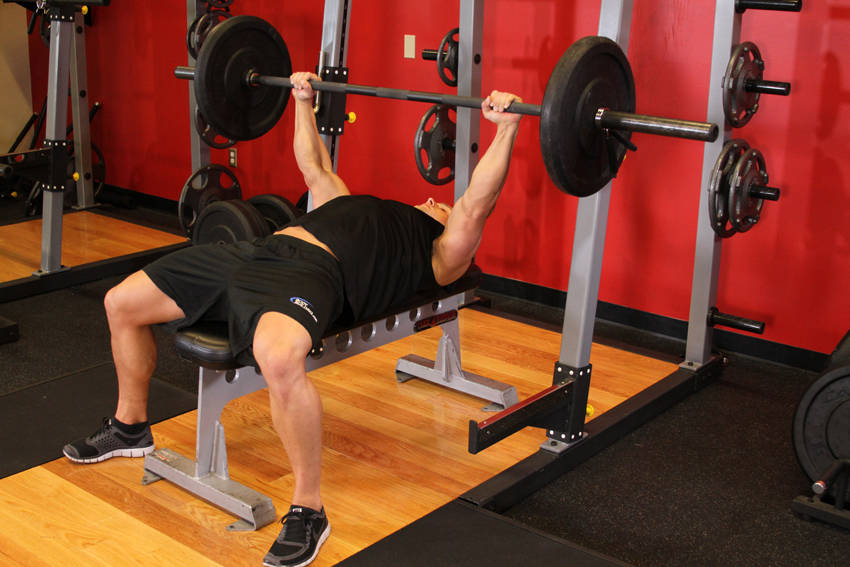
- Rotate your wrists so your palms face away from you; this is your starting position.
- Press the dumbbells up together as you breathe out, keeping full control throughout.
- Lock your arms out at the top and hold briefly before lowering back down slowly.
- Once finished, bring the dumbbells back to your thighs and then set them down safely.
Original library instructions (7 steps)
- Lie back on an incline bench with a dumbbell in each hand atop your thighs. The palms of your hands will be facing each other.
- Then, using your thighs to help push the dumbbells up, lift the dumbbells one at a time so that you can hold them at shoulder width.
- Once you have the dumbbells raised to shoulder width, rotate your wrists forward so that the palms of your hands are facing away from you. This will be your starting position.
- Be sure to keep full control of the dumbbells at all times. Then breathe out and push the dumbbells up with your chest.
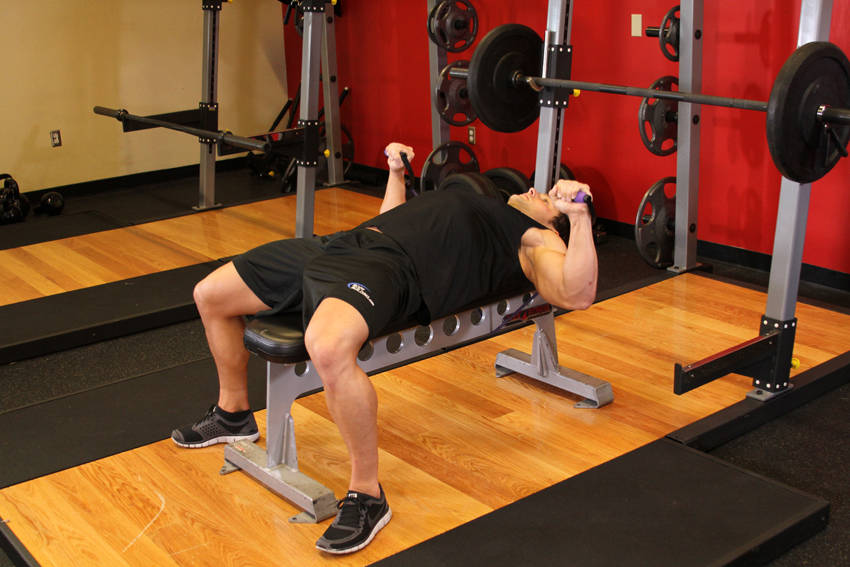
- Lock your arms at the top, hold for a second, and then start slowly lowering the weight. Tip Ideally, lowering the weights should take about twice as long as raising them.
- Repeat the movement for the prescribed amount of repetitions.
- When you are done, place the dumbbells back on your thighs and then on the floor. This is the safest manner to release the dumbbells.
Common mistakes
- Setting the bench angle too steep, which shifts work toward the shoulders; a moderate incline keeps the focus on the chest.
- Letting the dumbbells drift out of a straight path; keep them tracking evenly on both sides.
- Rushing the lowering phase; take about twice as long to lower the weight as to press it.
- Dropping the dumbbells to the floor after a set; lower them to your thighs first for safety.
Sets and reps by goal
| Goal | Sets, reps and rest |
|---|---|
| Strength | 3 to 5 sets of 5 to 8 reps, 2 minutes rest |
| Muscle | 3 to 4 sets of 8 to 12 reps, 60 to 90 seconds rest |
| Endurance | 2 to 3 sets of 15 to 20 reps, 45 to 60 seconds rest |
Ranges, not prescriptions. Start at the low end and add a set or a rep when every set feels controlled.
Tips
- Keep the bench between a thirty and forty five degree incline to target the upper chest without shifting too much load to the shoulders.
- Lower the weight under control rather than letting gravity pull it down quickly.
In the app: this exercise is one of 873 in GymPilot's library, with the same photos, form cues and a link back to the moment in an imported video it came from.
Questions
Is the incline dumbbell press good for beginners?
Yes, it follows a familiar pressing pattern and pairs well with a flat bench press once that feels comfortable.
Incline dumbbell press vs flat dumbbell press, which is better?
Neither is better on its own. The incline version emphasizes the upper chest, while the flat version targets the chest more evenly, so many people use both.