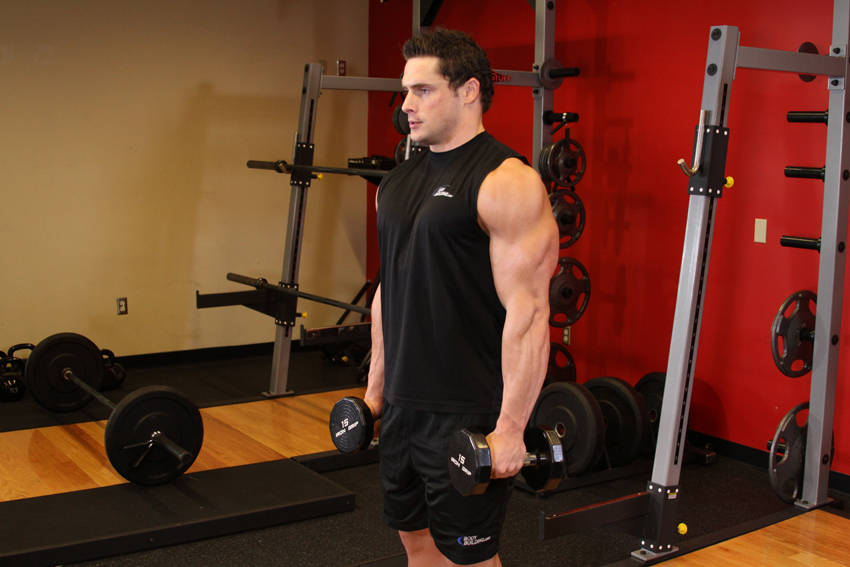
Lying One-Arm Lateral Raise
A dumbbell shoulder exercise done lying on your side on a bench, raising the arm out to the side against gravity. It isolates the shoulder through a strict, supported range of motion.
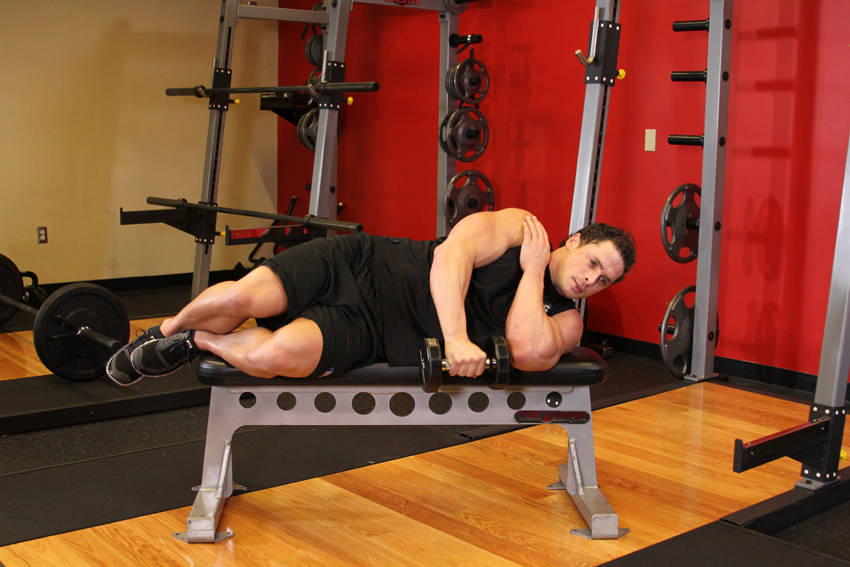
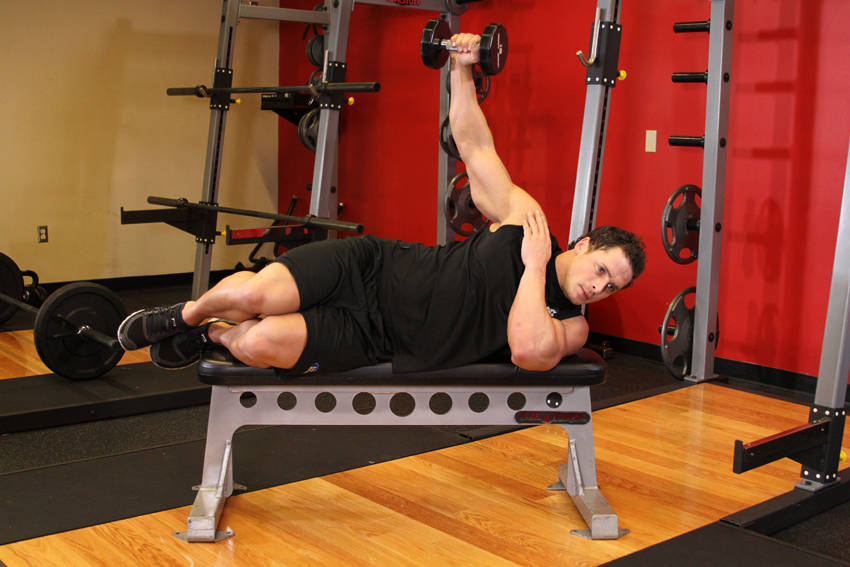
How to do the lying one-arm lateral raise
- Lie on your side on a flat bench, holding a dumbbell in the hand on top with your arm resting along your body.
- Brace your free hand against the bench or its leg to keep yourself steady and stable.
- Turn the palm of your working hand to face your torso, with your elbow slightly bent, before you begin.
- Raise the dumbbell out to the side until your elbow reaches about shoulder height and the arm is roughly level with the floor.
- Pause briefly at the top and squeeze the shoulder before lowering the weight back down slowly.
- Finish your reps on one side, then switch and repeat lying on the other side.
Original library instructions (5 steps)
- While holding a dumbbell in one hand, lay with your chest down on a flat bench. The other hand can be used to hold to the leg of the bench for stability.
- Position the palm of the hand that is holding the dumbbell in a neutral manner (palms facing your torso) as you keep the arm extended with the elbow slightly bent. This will be your starting position.
- Now raise the arm with the dumbbell to the side until your elbow is at shoulder height and your arm is roughly parallel to the floor as you exhale. Tip: Maintain your arm perpendicular to the torso while keeping your arm extended throughout the movement. Also, keep the contraction at the top for a second.
- Slowly lower the dumbbell to the starting position as you inhale.
- Repeat for the recommended amount of repetitions.
Common mistakes
- Swinging the dumbbell up using momentum instead of the shoulder; slow the lift down and control it.
- Rolling the torso backward to help lift the weight; keep your body still against the bench.
- Raising the arm too high above shoulder height, which shifts stress away from the shoulder; stop around shoulder level.
- Choosing a dumbbell too heavy to control on the way down; a lighter weight with a slow lower works better here.
Sets and reps by goal
| Goal | Sets, reps and rest |
|---|---|
| Strength | 3 sets of 6 to 8 reps per side, 90 seconds rest |
| Muscle | 3 to 4 sets of 10 to 12 reps per side, 60 seconds rest |
| Endurance | 2 to 3 sets of 15 to 20 reps per side, 30 to 45 seconds rest |
Ranges, not prescriptions. Start at the low end and add a set or a rep when every set feels controlled.
Tips
- Keep the movement slow on both the way up and the way down for a stricter shoulder contraction.
- Use a lighter dumbbell than you would for a standing lateral raise, since this position removes any momentum.
In the app: this exercise is one of 873 in GymPilot's library, with the same photos, form cues and a link back to the moment in an imported video it came from.
Questions
Is the lying one arm lateral raise good for beginners?
It can be trickier than a standing lateral raise because you need to balance on the bench, so it suits lifters who already have some experience with shoulder isolation work.
What muscles does the lying one arm lateral raise work?
It targets the shoulders, particularly the side of the shoulder, since the lying position removes help from the legs and torso.