
Blog · muscles
Hip Thrust: Form, Loading and a Glute Program
· GymPilot Team
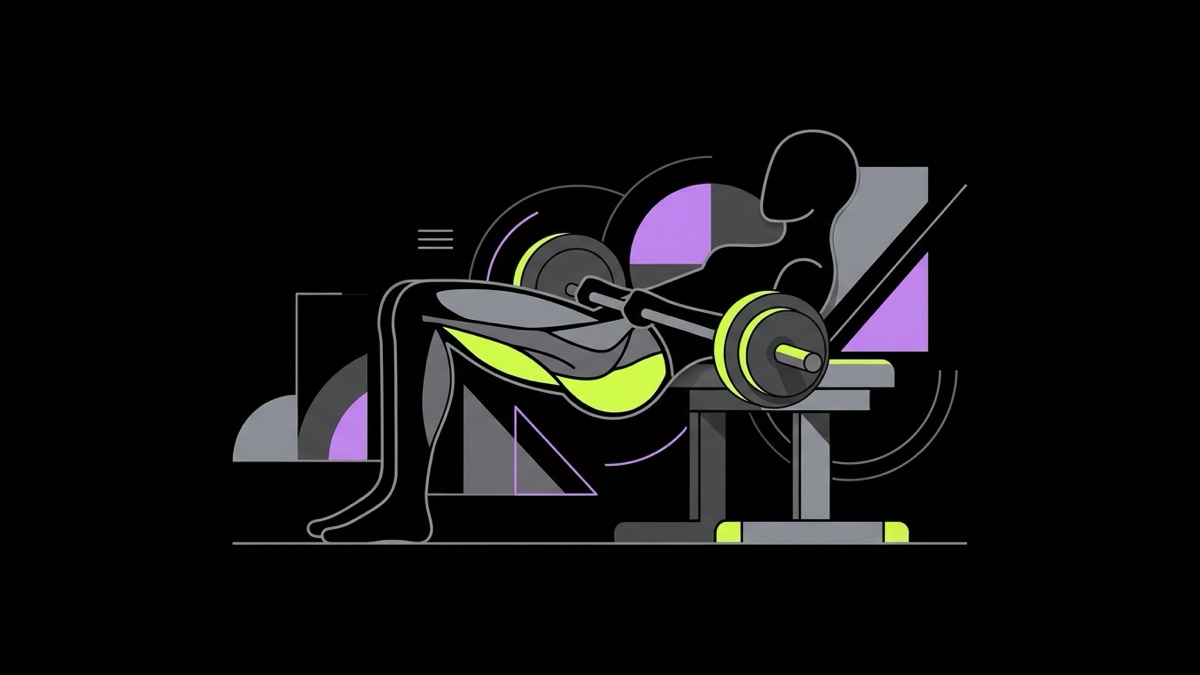
The hip thrust has become one of the most recommended glute exercises for a simple reason: it loads the glutes through nearly their full range of motion in a way few other exercises manage as directly. This guide covers what the hip thrust trains, how it compares to the glute bridge, the form cues that make it worth doing well, and how to build it into a short glute-focused program.
Key takeaways
- The hip thrust's main target is the glutes, with real secondary work for the hamstrings and core.
- A hip thrust generally allows more range of motion and more load than a glute bridge performed flat on the floor.
- Full hip extension at the top of every rep, without over-arching the lower back, is the single most important form cue.
- Three sets of 8 to 12 reps covers most muscle building goals; heavier, lower rep work suits a strength-focused block.
- The hip thrust pairs well with a hinge movement like the good morning or a squat pattern on the same leg day.
What the hip thrust actually trains
The hip thrust's primary target is the glutes, specifically the glute max, which extends the hip from a bent position back to straight. Because your upper back is elevated on a bench rather than flat on the floor, the movement allows the hips to drop lower at the bottom of the rep than most floor-based alternatives, which is part of why it can load the glutes through such a complete range. The hamstrings assist throughout, and the core has to stay braced the entire set to keep the torso from sagging as the hips rise and fall under load.
That combination makes the hip thrust a strong complement to squats and deadlifts rather than a replacement for either. Squats and deadlifts both extend the hip too, but neither isolates that extension quite as directly as a hip thrust does, since both also demand a lot from the knees, the upper back or the grip along the way.
Hip thrust versus glute bridge
Both movements extend the hip and train the same main muscles, but the setup changes how much range of motion and load each one allows.
| Factor | Hip thrust | Glute bridge |
|---|---|---|
| Starting position | Upper back elevated on a bench | Flat on the floor |
| Range of motion | Hips can drop lower at the bottom | Shorter range, floor limits the bottom |
| Typical loading | Barbell across the hips, heavier over time | Bodyweight or a lighter load |
| Setup time | Needs a bench and often a barbell pad | Minimal, just floor space |
| Best for | Lifters chasing more glute-specific load | Beginners or a quick floor-based option |
Barbell Hip Thrust for 3 sets of 8 to 12 reps, 90 to 120 seconds rest, is the standard loaded version once a bench and a barbell pad are available. Barbell Glute Bridge for 3 sets of 10 to 12 reps, 60 to 90 seconds rest, is the floor-based version worth using when a bench is not free or as a lighter, warm-up-friendly option before the heavier hip thrust. Single Leg Glute Bridge for 2 to 3 sets of 10 to 12 reps per leg, 45 to 60 seconds rest, adds a unilateral option that also exposes any left to right imbalance. Physioball Hip Bridge for 2 to 3 sets of 12 to 15 reps, 45 seconds rest, adds an unstable surface that asks more of the core to keep the hips level throughout the set.
Getting the hip thrust form right
Set your upper back against the edge of a bench with your feet flat on the floor, roughly hip width apart, and a barbell resting across your hips with a pad or a folded towel to protect against discomfort. Drive through your heels and extend your hips upward until your body forms a straight line from your shoulders through your hips to your knees at the top, squeezing the glutes hard for a moment before lowering back down under control.
The most important cue is stopping the rep at full hip extension without continuing to arch the lower back past that point, since the extra range at the top comes from the spine rather than the hips once that happens. Keeping your chin slightly tucked and your ribs stacked over your pelvis throughout the set helps keep the work in the glutes and hamstrings rather than letting the lower back take over the last few degrees of the movement.
Building a short glute-focused program
A simple two day glute-focused addition to an existing lower body split might pair a hip thrust variation with a hinge movement and a bit of unilateral work. Stiff Leg Barbell Good Morning for 3 sets of 8 to 10 reps, 90 seconds rest, trains the same hip hinge pattern from a standing position, giving the glutes and hamstrings a second angle of work in the same session. Warm up the hips first with a short round of Standing Hip Circles and Standing Hip Flexors before loading either the hip thrust or the good morning, since both movements ask the hips to move through a large range right from the first working set.
Common hip thrust mistakes
The most common mistake is loading weight faster than form can absorb it, since a hip thrust allows heavier loads sooner than most people expect once the basic pattern is grooved. Feet placed too far from the hips push more of the work into the hamstrings and away from the glutes, while feet placed too close can cause the knees to cave inward under load. A foot position that lands roughly under the knees at the top of the rep, with the shins close to vertical, keeps the tension where the exercise intends it.
Another common issue is bouncing the weight off the floor between reps rather than pausing briefly at the bottom. A short pause at the bottom of each rep removes momentum from the equation and forces the glutes to do the work of restarting the movement, rather than letting a quick rebound off the floor carry some of the load. Rushing through reps for the sake of higher rep counts tends to make the bounce worse, so a controlled tempo generally beats a fast one for this particular exercise.
Finally, some lifters skip the barbell pad and try to push through hip discomfort from the bar itself, which usually means the working weight stays lower than it needs to be simply because the setup is uncomfortable. A padded barbell or a folded towel across the hips removes that limiting factor entirely and lets the actual working muscles, not the discomfort of an unpadded bar, decide how much weight goes on.
Where the hip thrust fits in a full training week
The hip thrust is one exercise in a much larger picture of building a balanced lower body. Best Exercises for Every Muscle Group is the hub for the complete list if you are building a full program rather than adding one movement. Trap Bar Deadlift: Why It Suits Most Lifters covers another hip-dominant lift worth knowing, Lat Pulldown: Grips, Form and Programming rounds out the upper body pulling side of a session, and Chest Isolation Exercises: Finish Every Push Day covers the pushing muscles that balance a week built around hip-dominant lower body work.
Once you have settled on the hip thrust variations and rep ranges that fit your program, save them in GymPilot so your next leg day is ready to go without rebuilding it from scratch: try GymPilot.
Fitness content on this page is general information, not medical advice: consult a professional if you have a condition or injury.
Questions
What muscles does the hip thrust work?
The hip thrust's main target is the glutes, with real secondary work for the hamstrings and a smaller contribution from the core, which has to stay braced to keep your torso from sagging as the hips extend under load.
Is a hip thrust or a glute bridge better for glutes?
A hip thrust generally allows more load and a fuller range of hip extension because your shoulders are elevated on a bench, which lets the hips drop lower at the bottom of the rep. A glute bridge, performed flat on the floor, is a simpler setup that still trains the same muscles with less range of motion.
How much weight should I hip thrust?
Start with just the bar or a light barbell load and focus on a full range of motion and a hard squeeze at the top before adding weight. Because the hip thrust allows heavy loading fairly quickly, form should stay the limiting factor for the first several sessions, not how much weight is on the bar.
How often can I train hip thrusts in a week?
Two sessions a week that include hip thrusts, with at least a day of recovery between them, works for most people. Since the movement is fairly joint-friendly, it tolerates more frequent training than many lower body lifts, provided total weekly volume stays reasonable.
What is GymPilot?
GymPilot is an iPhone app by Viral Labs that turns a public workout link from TikTok, Instagram, YouTube or Facebook into a structured workout with exercises, sets, reps and rest, which you can save, schedule and train from. It also includes an 873-exercise library and an AI program builder.
Is GymPilot free?
Yes. The free version includes 5 imports a month and 1 collection. GymPilot Pro removes those limits and is sold monthly or yearly through the App Store.
Does GymPilot download videos?
No. GymPilot reads only what a public post makes visible, such as the caption, slides and transcript, and it does not download the video, work on private posts, or bypass any platform restriction.