
Blog · muscles
Rear Delt Exercises: 10 Moves for Balanced Shoulders
· GymPilot Team
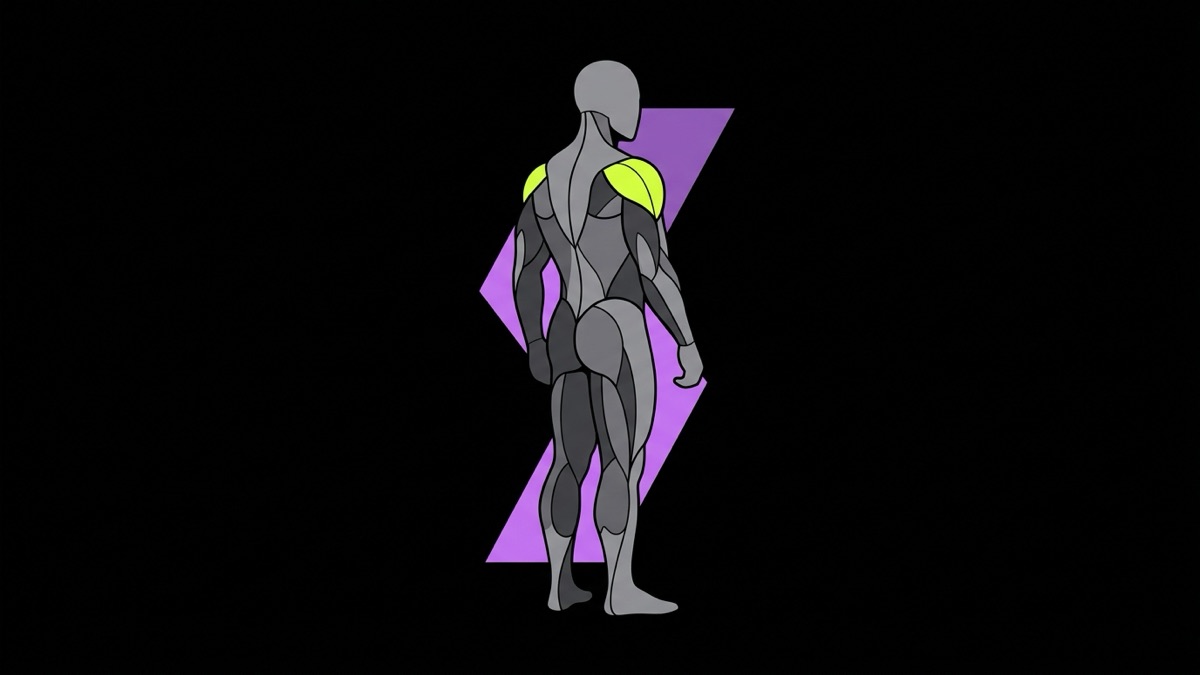
Rear delt exercises are the ones most shoulder routines skip, since chest and shoulder pressing already work the front of the shoulder heavily and back training only hits the rear delts indirectly. This guide covers cable, dumbbell and barbell rear delt exercises, each with sets, reps and rest given as ranges, to help balance out a routine that is otherwise front-and-side heavy.
Key takeaways
- Rear delt exercises balance out the front and side shoulder work most pressing movements already provide.
- Cable exercises like Face Pull let you combine a pull with external rotation in one movement.
- Dumbbell rear delt raises isolate the muscle directly but need a light weight and strict form to work well.
- One to two dedicated rear delt exercises per session is enough for most routines.
- Weekly volume for the rear delts fits the same 10 to 20 total set range that applies to other smaller muscle groups.
Why rear delts get neglected
Most shoulder training in a typical routine comes from pressing movements, which load the front and side of the shoulder heavily, and from back exercises like rows and pulldowns, which hit the rear delts only as a secondary muscle. Without a dedicated exercise, the rear delts end up as one of the more undertrained muscles in a lot of routines, even ones that otherwise cover the rest of the upper body well.
That imbalance matters beyond how a shoulder looks from behind. Balanced strength across the front, side and rear of the shoulder supports healthier shoulder positioning during pressing and overhead work, which is part of why a few rear delt sets are worth the small amount of extra time they take.
Cable and machine rear delt exercises
Face Pull uses a rope attachment pulled toward your face at roughly eye level, combining a pulling motion with external rotation of the shoulder. It is one of the most commonly recommended rear delt exercises for exactly that combination. Run 3 sets of 12 to 15 reps, 45 to 60 seconds rest.
Cable Rear Delt Fly uses crossed cables to pull the arms out and back in a wide arc, isolating the rear delts more directly than the pulling motion of a face pull does. Use 3 sets of 12 to 15 reps, 45 to 60 seconds rest.
Cable Rope Rear-Delt Rows combine a rowing motion with a wide elbow path, working the rear delts alongside the upper back. Run 3 sets of 10 to 12 reps, 60 seconds rest.
Sled Reverse Flye uses a machine that guides the same reverse fly arc a dumbbell version would follow, useful if the free weight version feels unstable at first. Use 3 sets of 12 to 15 reps, 45 to 60 seconds rest.
Dumbbell rear delt exercises
Reverse Flyes bend forward at the hips and raise the arms out to the sides, targeting the rear delts through a wide arc similar to the cable version above. Run 3 sets of 12 to 15 reps, 45 to 60 seconds rest, and keep the weight light enough to avoid using momentum.
Reverse Flyes With External Rotation adds a rotation at the top of the movement, which brings in more of the smaller shoulder stabilizers alongside the rear delt. Use 2 to 3 sets of 10 to 12 reps, 45 to 60 seconds rest.
Bent Over Dumbbell Rear Delt Raise With Head On Bench supports the head and chest on an inclined bench, which removes momentum from the lower back and makes it easier to isolate the rear delts strictly. Run 3 sets of 12 to 15 reps, 45 to 60 seconds rest.
Seated Bent-Over Rear Delt Raise and Lying Rear Delt Raise are two more setup variations of the same raise pattern, useful depending on what bench and seating your gym has available; both follow the same rep ranges as the versions above.
Barbell and pulling rear delt exercises
Barbell Rear Delt Row rows a barbell to the upper chest with a wide grip and flared elbows, shifting emphasis toward the rear delts more than a standard bent over row would. Use 3 sets of 10 to 12 reps, 60 to 90 seconds rest.
Wide-Grip Rear Pull-Up pulls the body up toward a bar behind the head with a wide grip, working the rear delts and upper back together through a longer range than an isolation exercise offers. This is a demanding variation; 2 to 3 sets of 5 to 8 reps, 90 seconds rest, is a reasonable starting point.
Finish a rear delt session with a Shoulder Stretch as a cooldown rather than as a working set.
Common mistakes with rear delt training
Using too much weight is the single most common issue with rear delt isolation work. Because the rear delts are a relatively small muscle, a weight heavy enough to require swinging the arms or using the lower back to help finish the rep defeats the purpose of an isolation movement. Drop the weight until you can complete the full range strictly, then build up slowly from there.
Skipping the external rotation component on movements like Face Pull is another mistake worth avoiding, since pulling straight back without rotating the hands and elbows outward at the end of the movement leaves out part of what makes that exercise useful for shoulder health, not just rear delt size.
Training rear delts only on days when time allows is a third issue. Because these exercises take relatively little time compared with a full pressing or pulling session, it is easy to let them get cut when a session runs long. Placing them early in a session occasionally, rather than always last, helps make sure they get done consistently.
Building a rear delt session
One to two rear delt exercises added to the end of a shoulder, back or pull day is usually enough, since these are smaller muscles compared with the chest, back and shoulder movements they typically follow. Face Pull paired with either Reverse Flyes or Cable Rear Delt Fly covers both the rotational and the pure isolation side of rear delt training in a single session.
Weekly volume for the rear delts fits the same 10 to 20 total set range that applies to other smaller muscle groups, spread across however many sessions your routine includes pulling or shoulder work.
Where rear delts fit in a balanced routine
Rear delt work pairs naturally with a back or pull day, since many of the same exercises already involve the upper back to some degree. For the rest of a well-rounded lower body routine, Best Glute Exercises: 12 Moves Ranked by Purpose, Hamstring Exercises: 10 Moves for Strength and Health and Quad Exercises: 12 Moves From Squats to Isolation cover the muscle groups that most often get uneven attention the same way rear delts do.
For the complete reference across every muscle group, Best Exercises for Every Muscle Group is the starting point worth bookmarking.
Once you have a rear delt exercise or two picked out, save the session in GymPilot so it is ready the next time you train shoulders or back: try GymPilot.
Fitness content on this page is general information, not medical advice: consult a professional if you have a condition or injury.
Questions
Why are rear delt exercises important?
The rear delts balance out the front and side shoulder work most pressing exercises already provide. A shoulder trained heavily on pressing but rarely on rear delt work can end up pulled forward in posture over time, so a few dedicated rear delt exercises help even that out.
What is the best rear delt exercise?
Face Pull is one of the most commonly used, since a cable and rope let you pull toward your face while externally rotating the shoulder, which trains the rear delts and the muscles that support healthy shoulder positioning together in one movement.
How many rear delt exercises should I do per session?
One to two dedicated rear delt exercises is usually enough, since these are smaller muscles compared with the chest or back movements they often get paired with in a session.
How often should I train rear delts?
Two to three times a week works well, since rear delt exercises use relatively light loads and tend to recover quickly compared with a heavy pressing or pulling session.
What is GymPilot?
GymPilot is an iPhone app by Viral Labs that turns a public workout link from TikTok, Instagram, YouTube or Facebook into a structured workout with exercises, sets, reps and rest, which you can save, schedule and train from. It also includes an 873-exercise library and an AI program builder.
Is GymPilot free?
Yes. The free version includes 5 imports a month and 1 collection. GymPilot Pro removes those limits and is sold monthly or yearly through the App Store.
Does GymPilot download videos?
No. GymPilot reads only what a public post makes visible, such as the caption, slides and transcript, and it does not download the video, work on private posts, or bypass any platform restriction.